
A cracked molar or a gap where a tooth used to be creates more problems than just an incomplete smile. Damaged teeth can hurt when you chew, and missing teeth let the surrounding teeth shift out of position over time. Crowns and bridges in Roseville solve these issues by rebuilding damaged teeth and filling gaps with restorations that look and function like your natural teeth.
What Dental Crowns Actually Do
A crown is essentially a cap that covers an entire tooth down to the gum line. Think of it like a protective helmet that fits over a damaged tooth to restore its shape, strength, and appearance. Crowns work well when a tooth has extensive decay, a large crack, or has become weakened after a root canal. They can also cover teeth that are severely discolored or misshapen.
The crown itself is custom-made to match the size and color of your other teeth. Most crowns today are made from porcelain or ceramic materials that blend in naturally with your smile. For back teeth that handle more chewing pressure, your dentist might recommend porcelain fused to metal for extra durability.
When You Might Need a Crown
Several situations call for a dental crown rather than a simple filling:
- Extensive tooth decay – If more than half of your tooth structure is damaged or decayed, a filling won’t provide enough support. Large cavities weaken the remaining tooth, and biting down on a compromised tooth can cause it to crack or break completely.
- After root canal treatment – The procedure removes the inner pulp of the tooth, which contains blood vessels and nerves. Without that internal structure, the tooth becomes brittle and prone to fracturing. A crown protects it from breaking under normal use.
- Severe cracks or fractures – A crown holds everything together and distributes the pressure evenly when you chew, preventing further damage to the compromised tooth.
- Cosmetic concerns – Teeth that are severely discolored or poorly shaped can be covered with crowns to improve their appearance while also strengthening them.
How Dental Bridges Replace Missing Teeth
A bridge does exactly what the name suggests—it spans the gap left by one or more missing teeth. The restoration consists of artificial teeth (called pontics) held in place by crowns on the teeth adjacent to the gap. Those neighboring teeth act as anchors, supporting the replacement teeth in between.
Bridges prevent the problems that come with leaving gaps in your mouth. When you lose a tooth, the teeth on either side start drifting into the empty space. The tooth above or below the gap can also begin to move since it no longer has anything to bite against. These shifts throw off your bite alignment and can lead to jaw pain, difficulty chewing, and additional tooth loss down the road.
Different Types of Bridges Available
Traditional bridges are the most common type. They use crowns on the teeth flanking the gap to hold the replacement teeth in place. This option works well when you have healthy teeth on both sides of the missing tooth.
Cantilever bridges attach to just one adjacent tooth instead of two. These are used when you only have one natural tooth next to the gap, though they’re less common because they put more stress on that single anchor tooth.
Maryland bonded bridges use a metal or porcelain framework that is bonded to the back of the adjacent teeth. This type requires minimal alteration to the neighboring teeth, but it’s typically only used for front teeth since it can’t handle as much biting force.
The Process of Getting Crowns and Bridges in Roseville
Getting a crown or bridge usually takes two appointments. During the first visit, your dentist prepares the tooth by removing any decay and reshaping it to accommodate the crown. For bridges, the anchor teeth are prepared the same way. Impressions or digital scans of your teeth are taken to create a model for the dental lab.
You’ll leave with a temporary crown or bridge that protects the prepared teeth while the permanent restoration is being made. These temporaries aren’t as strong as the final version, so you’ll need to be careful with sticky or hard foods.
At the second appointment, the temporary restoration comes off, and the permanent crown or bridge gets checked for fit and color. Your dentist makes any necessary adjustments, then cements the restoration in place. The whole process from start to finish typically takes two to three weeks.
Taking Care of Your Restorations
Crowns and bridges can last 10 to 15 years or longer if you maintain them properly. Here’s how to protect your investment:
- Brush and floss daily – Pay extra attention to the area where the crown or bridge meets your gum line. Bacteria can still accumulate there and cause decay in the underlying tooth structure.
- Avoid hard foods and objects – Don’t chew ice, hard candy, or other objects that could crack the porcelain. If you grind your teeth at night, wearing a nightguard protects both your natural teeth and your restorations from excessive wear.
- Clean under bridges properly – Flossing requires a bit more technique since you can’t floss between the artificial teeth and your gums the normal way. Floss threaders or special brushes designed for bridges help you clean underneath the pontic, where food particles can get trapped.
- Attend regular checkups – Your dentist can spot potential problems early and make sure your restorations are holding up well under daily use.
Alternatives to Traditional Bridges
Dental implants offer another way to replace missing teeth without relying on adjacent teeth for support. An implant consists of a titanium post that gets placed in your jawbone, topped with a crown that looks like a natural tooth. While implants cost more upfront and require minor surgery, they don’t affect the neighboring teeth and can last even longer than bridges.
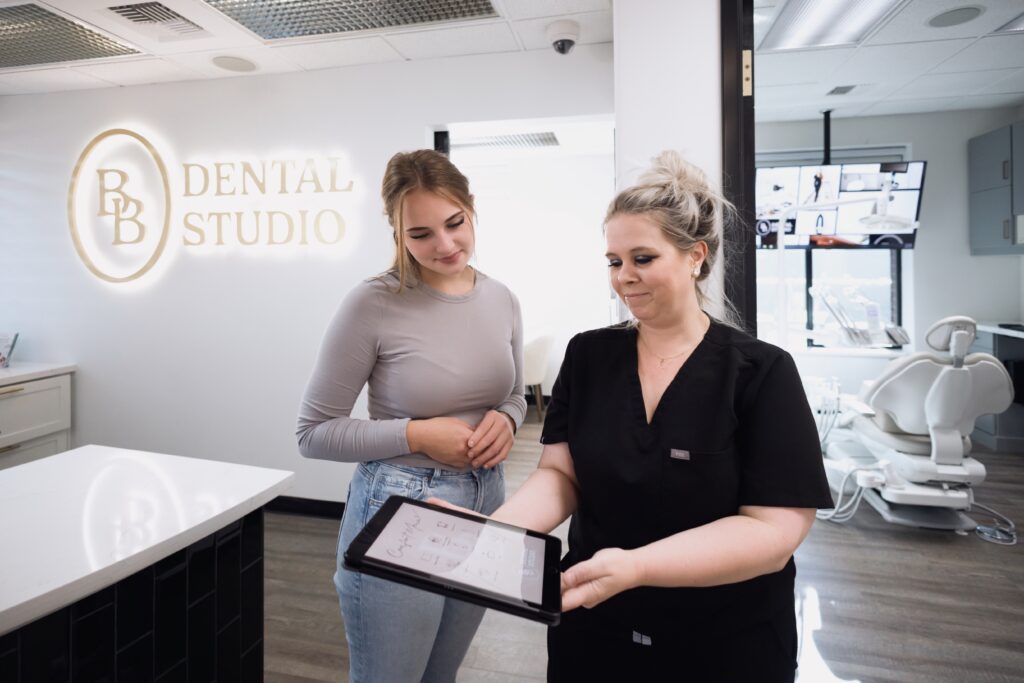
Your dentist at BB Dental Studio in Roseville, CA can explain the pros and cons of each option based on your specific situation, including the health of your surrounding teeth, your jawbone density, and your budget.
Restore Your Smile’s Function Today
Living with damaged or missing teeth affects more than just your appearance—it changes how you eat, speak, and feel about yourself. Crowns and bridges in Roseville give you back the ability to chew comfortably and smile without worrying about gaps or broken teeth. Schedule an appointment with BB Dental Studio to discuss which restoration option makes the most sense for your needs and get back to enjoying all your favorite foods without hesitation.

